Postpond is a mobile app that explores how digital communication might feel more intentional, emotional, and human by borrowing qualities from physical postcards—slowness, effort, and anticipation. The project asks: What happens when we design for connection rather than efficiency?
RESEARCH
In order to understand the effectiveness of the first design iteration, I conducted six 45-minute user interviews focused on people who regularly keep in touch with friends or family at a distance. I centered my research around questions such as:
What makes postcards feel meaningful?
What feels unsatisfying about existing digital communication tools?
Who do people want to connect with in slower, more intentional ways?
What kinds of content feel worth sharing when speed is removed?
RESEARCH INSIGHTS
1. Users crave digital slowness but still need memory cues
2. Users value ritual and effort in postcards
INSIGHT #1
“It has to be inconvenient enough to feel special, but not so inconvenient that I forget about it.”
Users enjoyed the idea of delayed communication, but worried that without reminders, the experience would simply disappear from their routines.
TRADITIONAL APPROACH
Most messaging apps rely on:
Push notifications
Badges and alerts
Interruptive reminders
While effective for engagement, these patterns introduce urgency and obligation, undermining the feeling of anticipation and care that users associate with postcards.
MY DESIGN DECISION
I removed push notifications entirely and designed silent, ambient reminders instead:
The app icon subtly changes when a postcard arrives
A home screen widget acts as a quiet visual cue

Widget that silently changes to reflect your inbox status
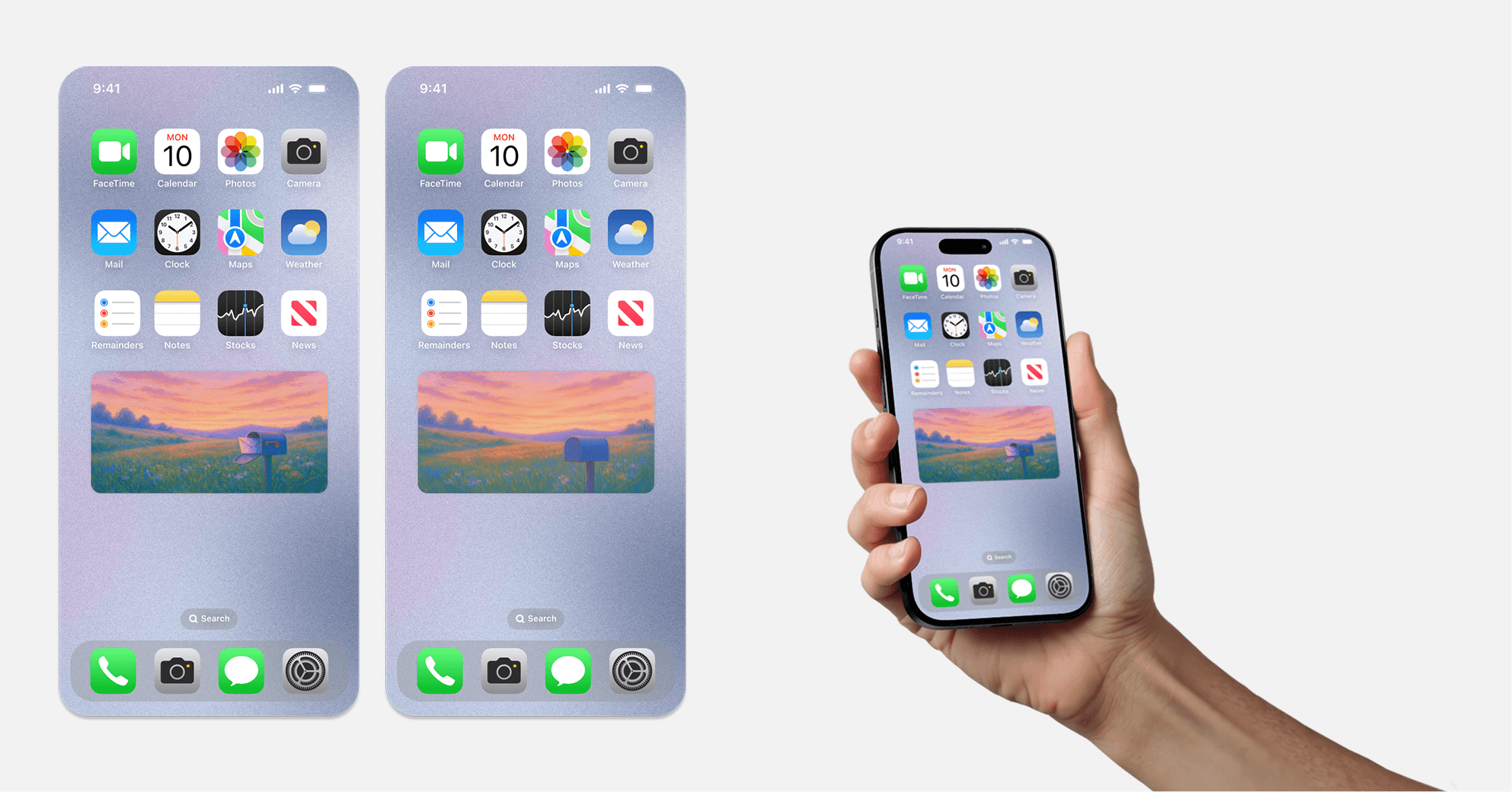
Ambient landscape that changes to reflect one's mailbox
INSIGHT #2
“It’s like a small ceremony—I put on the stamp and drop it in the box.”
Users described sending postcards as a ritual rather than a task.
TRADITIONAL APPROACH
Digital communication often removes friction:
One-tap sending
Auto-completion
Instant delivery
This efficiency collapses emotional weight.
MY DESIGN DECISION
I intentionally introduced gentle friction:
A deliberate send flow
No instant delivery confirmation
Clear separation between writing and sending
OUTCOME
The final design presents Postpond as a calm, expressive space for intentional connection—one that resists urgency and embraces slowness, effort, and surprise.
Rather than competing with messaging apps on speed, Postpond offers a complementary mode of communication designed for depth.
NEXT STEPS
Test whether ambient reminders sustain engagement without push notifications
Evaluate whether handwriting-first interactions increase perceived emotional value
Refine interaction patterns into a lightweight design system
Collaborate with engineering to prototype and ship a production-ready MVP
REFLECTION
Postpond challenged my assumptions about usability and efficiency. Designing for emotional connection required me to intentionally break conventions—and justify when and why those breaks mattered.
This project reinforced that good product design isn’t always about removing friction; sometimes it’s about placing it carefully.